Educational Clutter and the #ADHD Teacher

All my data are anecdotal, meaning they are not data. Well, shucks. I’ll share some observations anyway, and maybe some of y’all can relate.

A few of my students have it written in their 504 or IEPs that they may step out into the hallway to regroup and regulate their anxiety and emotions. I fully support this, and am wondering how I can make the emotional, visual, and educational clutter minimized and quiet. And –I wonder if I am able to do this. One student in particular has complained about the visual clutter in my room, and has skipped class several times saying this is the reason. My data inform me that her skipping class happened about the same time the population of the class changed from 31 students to 33. This might be a physical tipping point for her. And in our infrequent and fragmented conversations, I offered to her that she hasn’t allowed the time or space when I have made changes to accomodate her.

A few things: cell phones, physicality, and #ADHD/anxiety: how do these contribute or rather, destroy, a comforting classroom environment?

I created this slide presentation a few months ago imploring students to put away their cell phones.

Teaching and #ADHD

And while it may not make sense or break through the mental fragmentation of students’ use of their devices, perhaps one or two of them will think about it and put it away, if not for me, but for themselves. We are currently working on argumentative reading and writing, so perhaps it’s time I share it again as a mentor text for argumenative writing. As I’ve said, these devices remind me of packs of cigarettes. They’re ubiquitous, and cause second-hand damage not only to the user, but also for those surrounding their use. I’m too tired right now to write my research paper on this. Leave me alone.

There is a lot of world noise now, too. I find myself overwhelmed, and I know how to calm and soothe myself. My empathy has necessarily limits: I know keeping myself regulated and grounded will be key to helping students maintain their core. And, I am compelled to continue to curate content and seek facts and truth.

Thinking of visual clutter in my room…

Thinking about my classroom, I have a lot of books. Some students love all my books, and one even wrote me a beautiful card calling me The Book Fairy,” a monikor I treasure. Many students over the years have told me how much they love the vibe of my room, and that makes me happy. And of course, in no way am I offended by one student sharing that my room gives her anxiety; it’s good feedback. She seemed to understand when I told her that many things on the classroom walls were not my choice, but in support of the building and district’s requirements, such as the social contracts (Capturing Kids’ Hearts), the learning targets, what’s on the white boards, etc. She seemed to understand that a few things I have on my bulletin boards and walls must be there so I remember them (that good ol’ ADHD brain of mine).

I have…a lot…of books
This was during moving time, early in the year. It does not, repeat, does not look like this now.

I’m trying, y’all. I really am. I’m trying to keep up with some personal events, grief, stress, grading, keeping things organized, etc. and some things just have to sort themselves out. The solution I came up with for this one student is to give me one week, and then we’ll figure something else out. I want all students to feel safe and comfortable in my classroom (home away from home), and balance my needs, too. Anyone with ideas, I’m open to most of them. But remember, I am an ELA teacher, and text-rich environment is my passion. Ideas include how to minimize the noise from the world, too.

CHAOS

Book Tastebuds.

What happens when we as reading teachers don’t want to read a book?

Deeply interesting and engaging thread in Betsy Potash’s Creative English high School Teachers page on Facebook today concerning American Dirt by Jeanine Cummins. And while I’ll post links and resources, the big question I’m left with comes from the pushback I received from another teacher, to the point I should not be allowed to voice criticism unless I’ve read the book.

Is that accurate? Do we always have to read the book before we decide something, or what media to consume?

Have you ever tried to make a toddler eat? I know a few wonderful toddlers who don’t like macaroni and cheese, preferring broccoli and other vegetables. My own sons as toddlers has some quirky eating habits. The older one hated spaghetti and most pasta, including macaroni and cheese. He loved peanut butter and jelly sandwiches. The younger one wasn’t picky, and his preference for junk food became a battle. But they did know their own minds, even if they didn’t have the words or vocabulary to articulate their discerning tastes. And over time, they did try new things and expand their palettes.

Our students don’t like to read. They don’t. Why? Many reasons. They struggle, it’s not entertaining for them, book culture seems odd and foreign to some, and oftentimes they don’t see themselves reflected in the novels many districts push. The texts are not ‘window, mirrors, or sliding glass doors’ (Rudine Sims Bishop).

But if you ask them about certain movies, stories, or their own interpersonal relationships and what keeps and breaks friendships, what keeps them faithful or what does betrayal look like and do, they will have plenty to say. And then we can work together on what they might like to read, on what burning questions they have that books and texts can help to inform and enlighten, and challenge, then you can have them try something they might not have before. And they might find that it’s like food they don’t like. (How many teachers have done ‘book tastings’ — did you get offended when a student chose one book over another? Of course not.)

Then why was it that the thought that a grown adult woman, (me), who listened to literary criticism of a novel and found it deeply resonating and informative, and chose not to spend my money on this book or read it, why was that so offending to some in that thread? (They hadn’t read it either.)

So many conclusions jumped to…

If you’re like me, your #TBR pile is miles deep. I’ve probably read over 700 books in my lifetime. Heck, even the scant posts on Goodreads tells me I’m at 396, and that hasn’t tracked my reading life. At what point do we allow students to make these choices for themselves? Rather, at what point as an adult am I allowed to read a critic or review and make up my own mind? Full disclosure: I hate to read movie reviews, and despise trailers that give away too much. But I still love movies, and get most of my recommendations from my sons. I guess I didn’t realize there was a number to being allowed to state clearly “I am not going to read this book.”

And when Esmeralda Bermudez said it reminded her of a novella I bust out laughing in the car. We (me and my students) put on novellas in class during Study Skills the other day, and of course I got my ‘teacher all over it’ because I am compelled to make connections to body language, facial expressions, etc., and themes of love, betrayal, despair, romance, etc. (We had just finished Romeo and Juliet.) And I don’t disparage the girls in my class and watching novellas. I spent countless hours with my mom and then into college watching All My Children and Guiding Light.

But what I am not going to do is read this book. Too many other things to read and watch. If that means I have a fixed mindset, okay. I’m good. In the meantime, I’m going to look for other, better books with authentic voices and perspectives about immigration.

We should allow our students to have their own tastes, too. All we need to do is tell them their tastebuds might change over time, and be flexible. After a few hundred books, I’m still flexible. But I want quality, not quantity, now. And Oprah’s recommendations don’t mean what they used to, either.

Links to the controversy:

Latinx Critics Speak Out Against ‘American Dirt’; Jeanine Cummins Responds

American Dirt’ was supposed to be a publishing triumph. What went wrong?

Jeanine Cummins American Dirt

PENDEJA, YOU AIN’T STEINBECK: MY BRONCA WITH FAKE-ASS SOCIAL JUSTICE LITERATURE

Anger is a Gift

Moss sat up and glanced over at Martin. “No, I didn’t! I don’t remember that at all.” Martin laughed. “Man, you were a mouthy kid,” he said. “You know you refused to sit in a booster seat?” “You’re kidding, man.” Martin shook his head. “You said you wanted a seat like all the others. You were grown, you said. So you wanted a cut just like them. And your dad supported you, too. He loved how much it annoyed me.” “Sounds like Papa,” Moss said, and he sighed. “I miss him so much.” “Me too, Moss,” said Martin, and he sighed. “Me too.” “I don’t remember that day,” said Moss. “I guess there’s a lot I don’t know.” “We all have memories of your father,” Martin said.

Oshiro, Mark. Anger Is a Gift (p. 388). Tom Doherty Associates. Kindle Edition.

Anger is a Gift by Mark Oshiro is a smoldering pain to fire novel: I won’t reveal any spoilers save for one: read it, and then please pay close attention to the author’s recommendations for other readings.*

Some ideas for introducing this novel, and helping students lead discussions:

Text Pairings:*

Teen Vogue: Don’t Teach Kids How to Survive Police Encounters: Train Cops to Deescalate

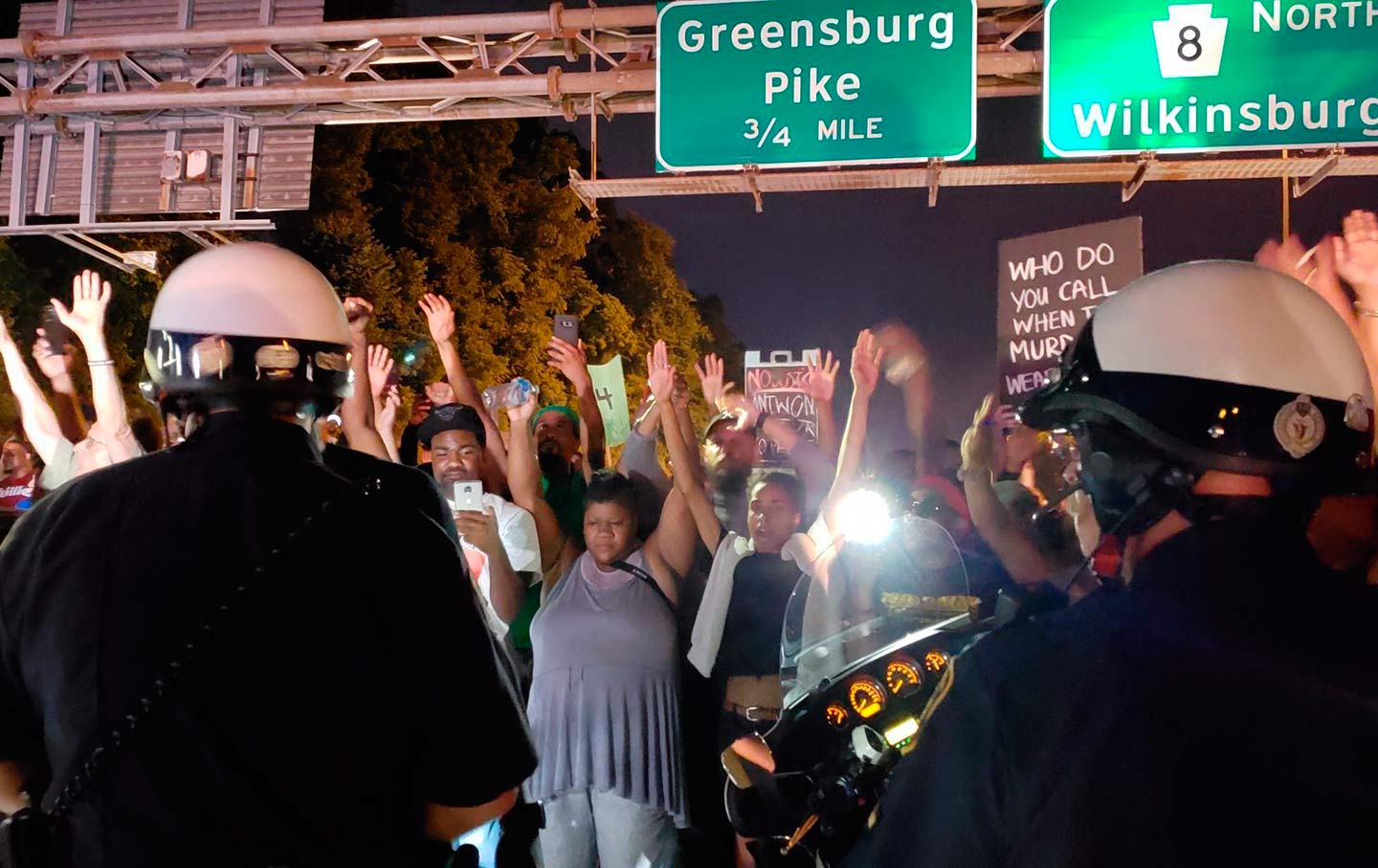
Another Black Teen’s Death by Police Brutality Drew Hundreds to Protest in Pittsburgh

https://www.thenation.com/wp-content/uploads/2018/06/Anton-Rose-Protest-ap-img.jpg

Questions:

Are police departments working on deescalation?

Should teachers also be train in deescalation?

The school administrators were complicit in many of the events of the novel. Consider exploring the school systems of institutionalized racism that create the deadly and damaging consequences.

Regarding the novel: What do you think happened to the school administration? What was their role in the events? Esperanza’s parents: intent versus impact discussion.

The Passage of I-940 (Seattle) https://www.king5.com/article/news/local/with-passage-of-i-940-washington-police-focus-on-de-escalation/281-612781268

The How and Why of Trauma Informed Teaching

One last note: Oshiro recommends reading The Parable of the Sower by Octavia Butler and I could not agree more. Read this now, and then read Anger.

Summer Series of Saves: It’s not just you.

Artwork by Mr. Babies
@mr.babies on Instagram

I am concerned about my #ProjectLIT project stalling out. I need these books. Don’t want: need. They aren’t some glib luxury for my incoming 8th students, they are a lifeline.

These books pulled me out of my own fractured, terrible attention span thinking. They brought back mental stamina– what my students lack, and desperately need if they’re going to move through high school with courage. Eighth grade is the worst of years, and it’s the best of years. Someday I’d love to teach Freshmen, but until a high school English team wants me, too, I am honored to continue to teach 8th-grade humans.

Why do we become fractured in our thinking? I am sure I can dig up the brain research about our current political and social climate combined with our devices, and the impact it has on our abilities to be in our own heads and dive deep into another’s narrative. But right now I have eleven tabs open, things on the to-do list, and a humble request: please help my students.

Anyway: please consider donating $5 to $10 for my students to get their hands on great books, books that reflect who they are, not what we think they should be. 

Summer Series of Saves: The Notebook


Note: all or most of these are WIPs: I continually update as I find new resources. You are welcome to make a copy and then rename to make them your own.

Based on Kelly Gallagher’s and Penny Kittle’s work, 180 Days, Two Teachers and the Quest to Engage and Empower Adolescents, I’m furiously working on trying to organize the new district, school, two preps, and other expectations.

Writers and Readers: Craft Notes https://docs.google.com/document/d/1R1HCdlRzCr-HP20EamACRXYVjCZAZPRBIh-BKhOIP-4/edit?usp=sharing

Text and Media Playlist: https://docs.google.com/document/d/1srYlGLpB-Xck57Uj8P4DDjh1wSSqVcFA6m8FTMsYUTk/edit?usp=sharing

I purchase standard composition notebooks for all my students: these are the inserts I photocopy and have students place inside their notebooks. I’m trying the Table of Contents new this year, with numbered pages. My goals include blending what I know engages students with tweaks and tips from Gallagher/Kittle, as well as the amazing teachers and educators of my PLN.

Notebook Inserts:

Notebook Table of Contents page: (revised from Gallagher/Kittle):

Note Taking Journal Insert

Color DIALECTICAL JOURNAL IDEA SHEET

Note Taking Journal Insert

Miscellaneous:

My weekly proposed schedule: https://docs.google.com/document/d/1_mzdQDwN40ot-BoKYxBCeYXvHZPmbqhXLHzqLrv1WHo/edit?usp=sharing

Reimaging the essay curated content: https://docs.google.com/document/d/16dqDJQlJEV4i4HxDZW9IzxHuSxIdovgY7aJZ0bhkD14/edit?usp=sharing

DOK For Students:

DOK for Students

Group Project Normshttps://docs.google.com/document/d/1Taj3QSvjh6Ue3XKnBoZ29ygO-4iSD752hEdMatAJbCM/edit?usp=sharing

Please contact me if you have any questions: my email is karen.kelly.love@gmail.com

PS Kris, this is for you:

Summer Series of Saves: Tea with Bears (or the hard sell)


clock
Never enough time…

Planning and shaping students’ reading lives–I have some concerns. Selfish, muddy concerns.

Donalyn Miller’s tweet about ill-defined independent reading prompted my own wondering about the basics: what is are the differences and connections between instructional and independent reading? A while back I wrote this blog post challenging those notions, too:  How to Survive a Bear Attack

https://bookwhisperer.com/2015/02/08/ive-got-research-yes-i-do-ive-got-research-how-about-you/amp/

And, the notion of leveling texts also seems outdated, or at least considered revised:

Here is the concern: there are four modules in my new district that are required. We, teachers, have some leeway concerning how, but not the what. My goals are to embrace the curriculum with courage and creativity, so bear with me while I ask some tough questions this beautiful Sunday morning:  what do we do when we’re faced with teaching books we don’t like? My plan is to read the books anyway and be honest with students about when we don’t have a choice, and how to navigate around it.

Four texts were chosen for my students. I have every confidence and assumption the texts are chosen by hardworking and mindful educators. I am wondering how I’m going to cooperate, comply and flourish with a scripted reading program, though, since for years I’ve had full choice over the texts I bring to the classroom. I have always looked for engaging, relevant, diverse, inclusive and popular texts: sometimes it worked, sometimes not. But what if I don’t want to read it? How do I sell it then?

The four books for the year are:

Inside Out and Back Again by Thanhha Lai

This one looks right up my alley: a short verse novel, accessible and easily paired with Amal Unbound by Aisha Saeed and other novels/graphic novels.

Unbroken by Laura Hillenbrand

Now this one I’m having trouble with. I get it, and I see and wholly understand why many love narratives such as these. (Think of The Boys in the Boat by Daniel James Brown and others like these. Although for the life of me can’t really figure out how How the Light We Cannot See got in there.) There were a few books I could not finish in the book club I used to frequent (another casualty of time and politics, and my big mouth), and Boys was up on the list. I think I read five pages. I don’t know what it is that I don’t care about personal boy-to-manhood sagas with war as the backdrop. It feels like a failure of character on my part. I will force myself to read it, make notes, and come away with insight and knowledge I didn’t previously have. And that’s exactly what I’ll tell students.

But it still feels like badly cooked broccoli. Someone else put it on my plate and I must be polite.

To Kill a Mockingbird by Harper Lee

This is one of my adolescent favorites, and am looking forward to pairing it with The Hate U Give by Angie Thomas and articles about how TKAM needs to be critiqued. That’s we can love a book and still grow out of it.

The Omnivore’s Dilemma by Michael Pollan

This one also looks like something I wouldn’t normally read but can get a lot out of, and plan a PBL around it. As I’m thinking about PBLs for next year, and after talking with my friend Sharon, I had this epiphany that the best PBLs stem from the lowest rung of Maslow’s hierarchy. Hear me out: our food, shelter, water, air, and reproductions are the foundation for all problems and conflicts: we were talking about her weaving unit, and how the labor of clothing fell to women, and now how we have an overabundance of clothes in landfills, etc.  I’m looking forward to reading this.

So how can I best disrupt texts and tow the line? 

And in the meantime, donations are welcome and encouraged. I need support for students to disrupt the canon, to add representation and love of literature. Please consider a small donation: Mrs. Love’s Project Lit DonorsChoose Project

Back to the original question: independent reading is choice, but it also includes fostering those discussions and excitement about what we’re reading. Instructional reading is the near-invisible guiding hand that helps students take risks with their reading, and nurture their reading lives. While I process this, read 180 Days, and curate companion texts, my challenge will be to focus on the most important instruction, day by day, week by week. With required reading texts this will be a challenge for me, but one I’ll do my utmost to succeed.

Any help or advice is welcome…

Summer Series of Saves: Teachers Talk.

Be centered on what matters to you. 
Just wanted to capture a wonderful chat I stumbled onto–good ideas and inspiring to focus on what matters. And: I want to share with students that teachers walk the walk–we want our students to love their reading and writing lives as much as we do.

please and thank you

I can’t wait for the district to figure out its spending. I can’t wait for any more co-opting of my time and fees from Donors Choose. I can’t wait for a miracle where a hero like Stephen Colbert or group buys out the entire stock.

My students can’t wait.

They need books.

Real books.

They want to read.

Classroom Library Wish List: http://a.co/frm0Nnq

Please consider helping me put books in their hands, books that will be part of my personal classroom library. I can’t do this alone.

Classroom Library Tip Jar

Please donate so I can replenish my classroom library.

$5.00