If You Really Want to Make a Difference in Black Lives, Change How You Teach White Kids


https://platform.twitter.com/widgets.jsSo, I wrote a piece for the New York Times…https://t.co/JbUnUQ8W6H
— Tracey Tweets on Tuesdays (@TraceyBaptiste) July 10, 2019
https://platform.twitter.com/widgets.jsIncredibly powerful, must-watch moment.
— Alexandria Ocasio-Cortez (@AOC) August 6, 2019
Thank you, @esglaude.pic.twitter.com/rT5CIGJU9O

I am an amateur in so many areas, it’s really kind of lame. One of the mental games I like to play with myself is the hidden costs of things, like trying to pull data from chaos. I am ill equipped and humbled. All I can offer is I like to think about big things, and this will be separated by multiple posts.
The question is: How does racism affect white people? Understand this question is not intended to center white people. We’ve been centered plenty. It’s meant to explore why this construct of race and power keeps getting propped up, exploited, and used to keep groups in fear, confusion, disoriented, and in danger.
When I was in high school, I went to a predominately white, wealthy parents, large high school in suburban Denver. Kids wore $300 boots and drove BMWs. I was not one of these kids. I was friends with a boy named Bryan. Bryan was Black. He was funny, smart, and always cracked me up. One evening, when we were at a football game, he told me he and his family were moving so he could attend the mostly Black high school. I did not understand fully why, and was heartbroken. I didn’t have the emotional means to express what was happening then, and I’m not sure I do now. It may have been a mixture of things: wasn’t our current school ‘better?’ And trust me: I tell the truth when I say I also recognized why going to the other high school was important and was indeed, better for him and his brothers. Was my friendship not enough to make him feel part of a community? But we lost. We lost his smile, his gifts, and his friendship. I knew once he moved, even if it was only twenty minutes away, he was moving to the other side of the world, our world.
I found my high school yearbook during the great Quarantine Time of Purging All Closets, and saw his picture. I miss that friend.
Flash-forward to the election of 2016. White kids chanting “BUILD THE WALL” in those predominately white schools in my former district. When I told my principal about her previous school and what the students did she said no, it wasn’t them, it was another building. Her denial was somewhat shocking at the time, but now considering she’s still social media friends with a teacher in the building who is a loud and proud Trump supporter, I guess I shouldn’t be surprised. The amount of energy and time for white educators and parents they spend on building their mental fort is incredible. What if…WHAT IF…they spent that time and energy saying and doing something ELSE. ANOTHER ACTION.
What if
What if all teachers had to do a study with Jane Elliott’s and Cornell West’s work in educational philosophy? Why, when I was in second grade, did I get the teacher who, when asked if she believed in “women’s lib” answered, “Oh no, I like having the doors opened for me!” I was crushed. I was born a feminist, and to hear my teacher say this was devastating. And the little boy’s smug face as he got the answer he wanted is burned in my brain. Now think of all the trillions of micro and macro aggressions: what if?
What if when people had land, resources, built a community they understood that the community is better with diversity of experiences, gifts, talents, and contributions?
What if…

Because right now we have administrators, parents, school boards and parents who force teachers into subterfuge and “asking forgiveness” whenever they talk about Malcom X or want to teach books from the #ProjectLit or #DisruptTexts communities. Right now, I’m trying to remind myself as a new person in a district/building that change takes time, even if I’ve been doing this work for almost 15 years as a teacher. Just getting some titles that aren’t white, colonized canon approved is painstakingly slow. There are gatekeepers and bureaucrats.
The hidden costs may include:
Since this series is “White People Homework” keep in mind it’s not for BIPOC to do your work for you. Take some time, pray if that’s something you do, meditate, relax, and think: how would your life be better if we all practiced anti-racism work?
One idea: if an administrator asks you to do something in your classroom that is counter to anti-racism work, ask why, and request a detailed response. Ask if they are willing to have a conversation with the school board, the parents, and other teachers and students: identify the real stakeholders in the community.
Merritt, K. (2017). Masterless Men: Poor Whites and Slavery in the Antebellum South (Cambridge Studies on the American South). Cambridge: Cambridge University Press. doi:10.1017/9781316875568.
https://www.macucc.org/racismhurtseveryonecoststowhitepeople
I will try to write this as simply as I can. But it is long. Push back as needed.
My first job, and one where I stayed for twelve years, was a middle school located in South King County, Washington. Being at a school for that long is an honor: I became part of the teaching and family community, and being a consistent, collaborative voice was one of my greatest joys. I am still a fan, mentor, supporter, and friend of many former students who have families and lives of their own. It’s not unreasonable for me to understand since I spent more time (and often money) on my students, putting my own sons at equal or second distance through the love of my job that I would gather years’ worth of memories, notes, and communal shared respect and love. I did, however, notice a change or shift, and it’s taken me the past two years of reflection to recognize what may have been happening. I noticed during about the last two years I was there, that Black male students were hurt. So much so, often power struggles escalated to the point of being concerned for my and their safety (not from me, but from other safety officers).

Anyway, I began to notice Black male students were struggling. Many students were, but two in particular had a very difficult time. None of my solid classroom engagement strategies or “management” (which is a problematic word) seemed to help. And even though the current administration dabbled in culturally-relevant teaching and offered what I’m going to term as “CRT Lite” any change of substance or conversation was nonexistent.
During the penultimate year, one student of the two seemed to hate me. He was from another district, and he complained to his mom and other community advocates that I was racist or picking on him. And that was his truth. So one of the family volunteer advocates, a Black woman in the community who knew him and other BIPOC students well, asked if she could come in and observe me. Now, if I had chosen, I could have said no and had admin and union support alike. But that’s not who I am or my practice. She said she was there under the pretense of observing him. She observed me in my class a few times, and then in a quiet voice, told me, in honest surprise, that I was a good teacher and was ‘helping him.’ Well, yes.
Keep that in mind when I share this next part: the next year, my last year in that building, we had one student who also really struggled. But his story, and his actions are traumatic and painful for himself and others. My admin wanted me out, and they got their wish. I moved to another district, a building with mirror demographics of that school I was leaving. I thought it would be great: the admin practically leapt across the interview table, hired me on the spot, and off I went. I got a call from another principal in the district and when he heard I accepted the position at XYZ school, just scoffed and said, “Good luck!”
This school was in a challenging transition. They had a young, white principal who hadn’t received her admin credentials yet. She had been a teacher at a charter school for about three years. School discipline reform, much needed and long overdue, was still in its shaky beginnings. We had a restorative justice person who was forced out of the building mid-year. There were many highlights, one of which I was introduced to Zaretta Hammond’s Culturally Responsive Teaching and the Brain. However, I didn’t have anyone to collaborate on this new learning with because my previous colleagues who shared neuroscience and education work were still at my previous school. This loss of institutionalized knowledge and feelings of isolation grew. And I didn’t realize how much losing connection with my previous school’s community would affect me: but more importantly: how this loss of connection affects students.
Through that year, I had some traumatized students. Behavior is communication. And I realized, just now, that what they saw in me was a threat. A very real, present threat: another white woman teacher, just like every other white woman teacher they’d had. I was the enemy. And they treated me accordingly, and they were justified. They were justified because unless I worked very hard to check my privilege, power, and bias, they were not going to feel safe to learn.

They came to me with having been shamed, humiliated, and judged by white lady teachers for nearly all of their schooling. Many BIPOC students have to fight all their lives to be heard, respected, and receive equitable and rigorous education. They came prepared to fight, and their movements, actions of leaving classrooms, was their way of expressing what their words couldn’t say. And if they did use words, it was often expletives and tears. They carried in their young bodies the harm of white teachers from day one. How could they see me, Mrs. Love, when I was just another middle-aged, white face? The same race as the president. The same race as police and their principals and the security following them through stores.
This isn’t easy to write. And I have a big ask. White teachers: please–do this internal work. It’s not comfortable, and it’s never ‘done.’ Fight for decolonizing curriculum. Fight for inclusion. Fight on behalf of your students and their families and never, ever expect a reward, thank you, or pat on the back. Do not fall into the savior trope. And yes: take it personally. Because if your student is screaming at you they have the fierceness and bravery of more lifetimes than you can ever imagine. This does not mean you need to dissolve your own dignity or self-respect. But please; do not give the ‘respect’ lessons first: self-respect and dignity matter more. Black lives matter.
And finally: we need to flip the table. I am angry that Jane Elliott’s work wasn’t in my teaching Masters coursework. That work on social justice isn’t the first things we work on as future and current educators. That we don’t confront the questions of if we’re teaching predominately white students or Black and students of color, how is it the same, and what matters?
What is our history and current situation of militarizing police?
https://platform.twitter.com/widgets.jsWe CANNOT normalize this… https://t.co/kJaHMTyQGH
— 🇯🇲Black🇭🇹Aziz🇳🇬aNANsi🇹🇹 (@Freeyourmindkid) June 2, 2020
https://platform.twitter.com/widgets.jsFor those unfamiliar, @ProblemAreasHBO spent its entire first season examining policing in America and what reforming it looks like.
— Wyatt Cenac (@wyattcenac) June 3, 2020
Recently, @BarackObama spoke about the need to be specific in trying to bring about reform.
Our show tried to do that along with some dumb jokes. pic.twitter.com/0QI2Mwpo6M
A man was murdered by the state in broad daylight, with witnesses. And maybe, this time, most of us in the United States finally, finally realize that we have gone over the edge of the abyss. While many of us screamed over the injustices, for others, cruelty was the point. We’re not there yet. We’re not anywhere near a place of peace and equality in our nation. When we address the militarization of our police we must address the grip of fear instilled in us by Republicans. They’ve used fear and the military force to keep us silent. Privilege benefits from the silence.
The Trump era is such a whirlwind of cruelty that it can be hard to keep track. This week alone, the news broke that the Trump administration was seeking to ethnically cleanse more than 193,000 American children of immigrants whose temporary protected status had been revoked by the administration, that the Department of Homeland Security had lied about creating a database of children that would make it possible to unite them with the families the Trump administration had arbitrarily destroyed, that the White House was considering a blanket ban on visas for Chinese students, and that it would deny visas to the same-sex partners of foreign officials. At a rally in Mississippi, a crowd of Trump supporters cheered as the president mocked Christine Blasey Ford, the psychology professor who has said that Brett Kavanaugh, whom Trump has nominated to a lifetime appointment on the Supreme Court, attempted to rape her when she was a teenager. “Lock her up!” they shouted.
The Cruelty is the Point by Adam Serwer, The Atlantic, October 3, 2018

In a recent interview, Ben Carson had the audacity to parse out that it wasn’t “tear gas” that was used. Listening to him support Trump was too much. He got so many things wrong. But in the Cabinet of the Damned, Carson played his role well: he’s Black, a doctor, and is brought out to play some role I can’t describe. The naive, innocent voice? The gentle portrayal of Trump? It certainly isn’t a role any other Trump supporter can play, not even his complicit, birtherism wife. She really doesn’t care, do you? Well, Carson does:
“I am very disappointed with the fact that people have used this as an excuse to vandalize and tear up the neighborhoods of the people who are so vulnerable and are least able to afford such things,” he says. “And, you know, I understand the anger and the wrath, but I do not understand why they can’t see that they’re hurting the very people they purport to be standing for.”
Ben Carson, Here and Now interview https://www.wbur.org/hereandnow/2020/06/03/ben-carson-protests-coronavirus
Carson: it was White Nationalists. He needs to read Langston Hughes.
Edit: Please read this first. Her work is powerful on this topic:https://medium.com/@AliMCollins/lets-talk-about-the-stereotypes-in-the-washington-murals-93912905c93c
@ArtDecider is a sharp Twitter user who built their reputation on deciding what is art or not art on tweets. And I have yet to disagree with their decision. And wouldn’t life be simple if we could just look to one Twitter user to determine these things? Well, simple, but boring, and disengaging. Which is why I am grateful to Alison M. Collins @AliMCollins for her thoughts and bringing this to my attention:
https://platform.twitter.com/widgets.jsJumping in on this thread to ask for help. BIPOC Ss and Ps have been asking for removal of a school mural with a “Dead Indian”for decades. We unanimously voted to remove it and now are being demonized by politicos and members of the art establishment. https://t.co/hzteqPPK9R
— Alison Collins 高勵思 (@AliMCollins) July 17, 2019
https://platform.twitter.com/widgets.js http://www.sfweekly.com/news/whos-even-defending-the-george-washington-high-murals-at-this-point/They can’t be moved. This has been fully researched. And received a unanimous vote from the Board. Why is it when Black and Native American Students & Parents self-advocate, their requests are always second-guessed? https://t.co/2KTuHl5EqH
— Alison Collins 高勵思 (@AliMCollins) July 18, 2019
The murals in question are the work of the Russian-born communist painter Victor Arnautoff. Arnautoff, who lived for a time in Mexico while working as an assistant to Diego Rivera, was one of the most prolific muralists of the Depression era. He is most famous for supervising the Coit Tower mural project that showed workers of all races being exploited by the capitalist class. For the George Washington High School murals, the leftist Arnautoff wanted to show Washington for who he really was; pushing back against what was then a silence on the founding father’s complicity in slavery and Native American genocide, Arnautoff painted the slaves who worked the fields at Washington’s Mt. Vernon home and one of Washington’s soldier’s standing on top of a dead Native American.
From https://www.thenation.com/article/san-francisco-school-mural/
When they were unveiled in 1937, these murals were upheld by the left as radical examples of social justice through art. Concerned parties now see Arnautoff’s work as exploitative and traumatic for the school’s minority students who have to encounter these striking scenes on a daily basis.
My question is, art to whom? For what purpose and context?
Perhaps every student who walked through the doors of that high school needed a month-long study session of the history, context, and purpose of the art. Never make assumptions about what anyone knows or doesn’t know about historical context.
Should Blacks Collect Racist Memorabilia? by Henri Louis Gates, Jr.
When it comes to the question of whether collecting those racist images is right, I often encounter two strong and diametrically opposed reactions from African Americans. Some can’t seem to amass enough examples of these “collectibles” or “memorabilia” (as we euphemistically call these hideous images today). Others think the whole lot should be assembled into one gigantic bonfire, incinerated, and the ashes buried in an impenetrable vault, or strewn over the broadest reach of the deepest ocean never to be displayed again. It’s as if these artifacts’ complete and total obliteration could wipe the slate clean or erase the painful memory and palpably harmful effects of seeing ourselves reflected over and over through the murky mirror of the anti-black subconscious as deracinated, gluttonous, lascivious non-reflective sub-human beasts — thieves, rapists, liars — a species apart from all other human beings, dominated and ruled like other animals by our instincts and passions and not by our (sub-standard) brains.
It’s Time for the Art World to Look At Its Own Racism by Bidisha
It is not for white people to decide what is or is not racist and it is not for them to decide what we people of colour are called. I think statues, plaques and awards paying tribute to racist men should be removed, and in their place should be a little notice naming and shaming them, and naming their prejudice. I think original racist titles can be altered and an introductory essay, as so many “classic” works have, putting that original title and content in context, can be included. None of this is difficult to do or hard to swallow.
https://www.theguardian.com/commentisfree/2015/dec/19/time-for-art-world-look-own-racism
Art/art history is full of colonizers’ stories and narratives. And though my Bachelor of Fine Arts hearts seems to understand what Arnautoff attempted to portray, atrocities to his worldview as an artist, were never explained, or seen any differently by the hundreds of white students walking through this space. Washington’s slaves and the dead Indian–most likely met with a shrug, if there was any thought at all. And the indifference is no less racist than the recent news story about white men standing with shotguns besides a shot-up Emmett Till memorial. Arnautoff may have been trying to shock and paint truth, it was always about whitewashing for the white viewers.
As for the students, no surprise, they have a better grasp of things than their liberal minders. As one ninth-grader wrote, “The fresco shows us exactly how brutal colonization and genocide really were and are. The fresco is a warning and reminder of the fallibility of our hallowed leaders.’”
https://jacobinmag.com/2019/07/art-san-francisco-george-washington
Note: I am adding this counter-argumentative essay if one wishes to use it as a close reading resource.
So when should art be painted over, removed, or destroyed? When does its removal cross the line from context to censorship? I don’t know except that it can never be a single decision or point, and that includes the singularity of the white community. Voices from other perspectives in the community must be given weighted consideration.
Examples, from the big public spaces to educational spaces:
Thinking about Arnautoff’s mentor, Diego Rivera, one can see the similarities of their works. But the impact is wide and deep.


My husband said, “Art is an opinion.” He also said it’s like the ice core testing in terms of testing the layers of our culture–it also shows whose in power, whose voices are heard and seen. We are getting someone’s opinion from that moment in time. Arnautoff seems to be saying American history is ugly, painful, and filled with people of color who were abused by the white colonists. And that makes it heartbreaking that we can’t at least save this artwork somewhere…but it can’t be moved. For students to say “meet you under the dead Indian” shows how his message became warped and complicit to indifference. As Ms. Collins said, ‘it normalizes violence.”
https://platform.twitter.com/widgets.jsYou can’t tell me this isn’t SERIOUS normalization of violence against Indigenous people. If you really care about “not repeating history” you don’t normalize violence of Black Brown and Indigenous people. And you DEFINITELY don’t do it in a school. #paintitdown pic.twitter.com/ZqoIjZhpND
— Alison Collins 高勵思 (@AliMCollins) July 27, 2019
Considering other art that’s used in schools, what kinds of imagery do you bring to your classroom, and moreover, what context do you provide? This image is used by many teachers when “celebrating” Thanksgiving. I have used it as a launch point to talk about racism in art via composition. It’s not the only conversation, and plenty of context is provided. Lies in art, and mythologizing white colonialism, are addressed, as with any conversation about propaganda.

‘30 Americans’: Art Works to Confront Racism https://kcts9.org/programs/arts-in-close/30-americans-art-works-confront-racism (the writer of this article no longer has a Twitter account: not sure why)
https://artistsagainstracism.org/
https://npg.si.edu/exhibition/barack-michelle

Ultimately, it is up to the community. Something that began as ‘look at these atrocities’ ending up in a public high school warped into normalization and complicity. I’m going to have an internal dialogue about this for a long time, and any thoughts you have about this are welcome.

Moss sat up and glanced over at Martin. “No, I didn’t! I don’t remember that at all.” Martin laughed. “Man, you were a mouthy kid,” he said. “You know you refused to sit in a booster seat?” “You’re kidding, man.” Martin shook his head. “You said you wanted a seat like all the others. You were grown, you said. So you wanted a cut just like them. And your dad supported you, too. He loved how much it annoyed me.” “Sounds like Papa,” Moss said, and he sighed. “I miss him so much.” “Me too, Moss,” said Martin, and he sighed. “Me too.” “I don’t remember that day,” said Moss. “I guess there’s a lot I don’t know.” “We all have memories of your father,” Martin said.
Oshiro, Mark. Anger Is a Gift (p. 388). Tom Doherty Associates. Kindle Edition.
Anger is a Gift by Mark Oshiro is a smoldering pain to fire novel: I won’t reveal any spoilers save for one: read it, and then please pay close attention to the author’s recommendations for other readings.*
Some ideas for introducing this novel, and helping students lead discussions:
Teen Vogue: Don’t Teach Kids How to Survive Police Encounters: Train Cops to Deescalate
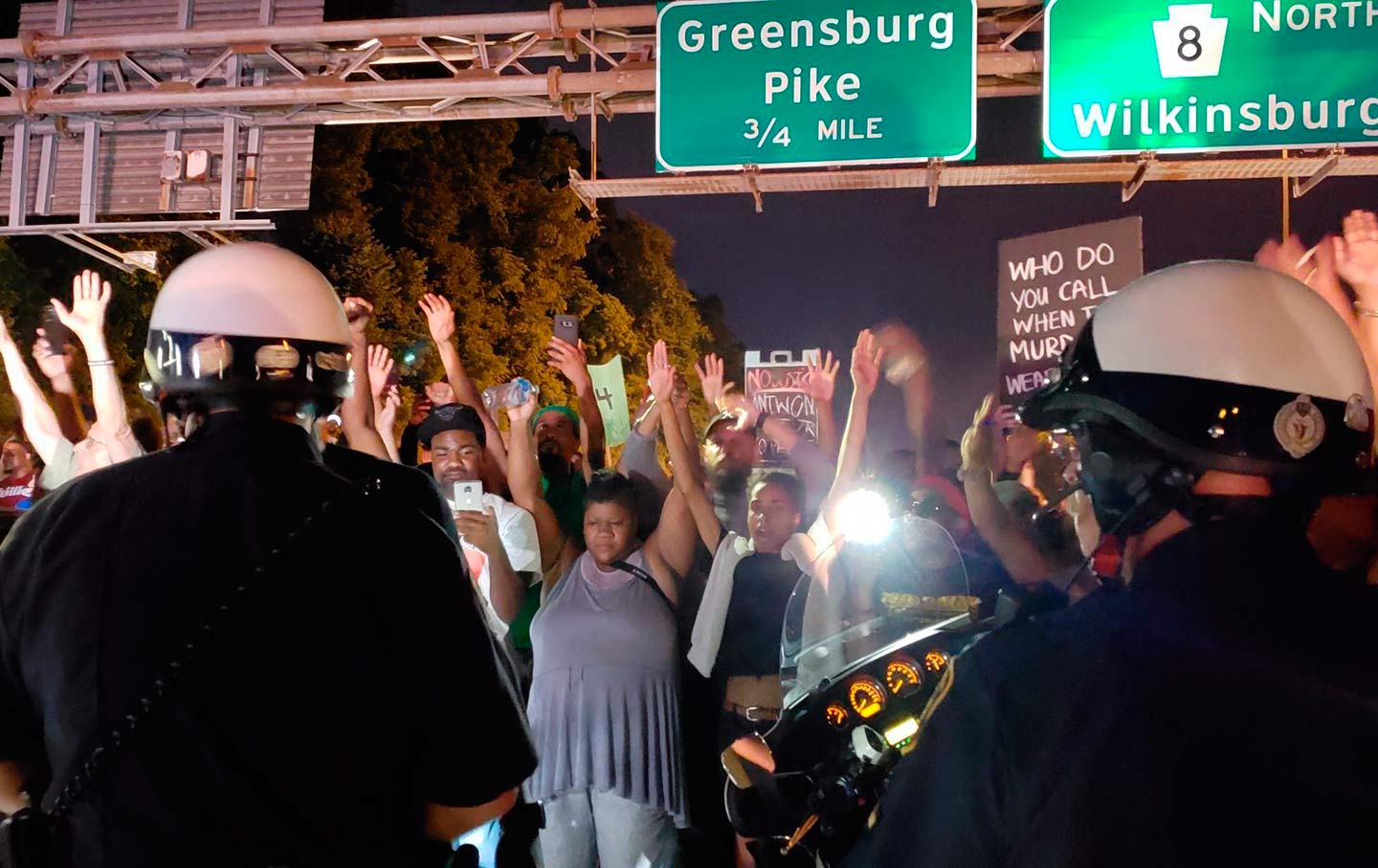
Another Black Teen’s Death by Police Brutality Drew Hundreds to Protest in Pittsburgh

Are police departments working on deescalation?
Should teachers also be train in deescalation?
The school administrators were complicit in many of the events of the novel. Consider exploring the school systems of institutionalized racism that create the deadly and damaging consequences.
Regarding the novel: What do you think happened to the school administration? What was their role in the events? Esperanza’s parents: intent versus impact discussion.
The Passage of I-940 (Seattle) https://www.king5.com/article/news/local/with-passage-of-i-940-washington-police-focus-on-de-escalation/281-612781268
The How and Why of Trauma Informed Teaching
One last note: Oshiro recommends reading The Parable of the Sower by Octavia Butler and I could not agree more. Read this now, and then read Anger.


The faces are blurred to protect my students, of course. I wish I could share the unredacted photo: the students are relaxed, even laughing. Their body language is engaged, there are so many things you wouldn’t see. When I snapped the pic, one student told me I was “snitching” because he thought they were in trouble. They weren’t really engaged with the instruction, but only socially with each other. When I took the picture, it didn’t occur to me that it would look like another Barbecue Becky snapping a tattle-tale image to show to cops. When I ask them to sit in assigned seats, they refuse with protest, and perhaps it is the protest of all the systemic racism that makes kids of color forced into situations they have no control over, so any moment, however fraught with consequences, of regaining that control they will do the thin-slicing and risk it. I wear the face of that oppression.
And there is an undercurrent of hostility, and I must recognize my part in it. And I will do better.
The past two years have been two of the angriest, hostile and fear-ridden teaching environments in the Title I schools I’ve taught. Districts are turning away from helping children in poverty to focus on equity and restorative practices.
Are these bad? No, of course not. It’s good and important work, and due to a few incidents, one I am looking at reflectively and self-critically. I have found my own inner dialogue (and slightly outer tone) to be defensive and hurt. And after listening to a just-in-time “Teaching While White” podcast, I have come to some conclusions.
I don’t always get it right. In fact, I need to always, ALWAYS consider the optics from the students’ point of view.
Being an Ally: The Role of White Educators in Multicultural Education
Assumptions and Actions
By Elizabeth Denevi
I do not expect people of color to thank me or to acknowledge my antiracist work. I consider it my moral responsibility and will not look for validation from people of color. I am the one who benefits most from multiculturalism.
https://teachingwhilewhite.org/being-an-ally/
In other words, not only will I not get a ‘thank you’ –it’s not warranted, it’s excessive, and any criticism I receive must be absorbed quietly. It is my privilege and honor to work in a Title I school: I have always felt like the lucky one. Not a savior. Not a hero. But the beneficiary of sitting side by side with the world in my own backyard. And my beliefs have not been expressed in practice to some observers in my classroom this year–and perception is the truth. So if that is what others are seeing: that I am not equitable in practice, voice, or actions, then it is only I who can change.
However: that doesn’t mean that students don’t have some huge trauma and anger– and these past two years the fear levels continue to spike, and for good reason. Our nation is a mess. It’s under an authoritarian regime. Voters of color are being purged. We are in an apartheid state. S*** is real. And if my actions as a white teacher are doing any harm, I must repair.
From:
How America Became the Incredible and Jaw-Dropping Laughingstock of the World
What Happens When You Refuse to Join the World — and Tell the World to Join You in Collapse? by Umair Haque
But the world also didn’t quite understand that America couldn’t ratify many of these treaties. It was itself a segregated apartheid state. It only ended segregation in 1971. How could it sign treaties giving people equal rights — or be punished and disciplined by its peer nations — when it itself wasn’t ready to do so to its very own people? All people weren’t people in America — so how could America sign up to a world order that wanted all people to be people? Do you see the problem? The world was moving ahead, swiftly, with conviction, towards greater equality, freedom, and peace. But America was trapped by its past — not just unwilling, but politically and institutionally unable to join it. You can’t exactly ratify human rights for all if you’re making black people drink at separate water fountains.
The single most effective structure in my experience is the teacher-team model. The cross-content team works as a cohort to support each student: even if only a team of three, alongside common planning times, a cohort, when working collaboratively, helps find patterns and proactively create supports for students. It’s almost like an adult unified front: not punitive, but gentle, warmly demanding adults who clearly let each child and their parent(s) know they are there for support. The best teams include a mix of personalities, and overarching maturity allowing that not all students will equally like all teachers.

Why don’t more schools, especially middle schools, do this model? Well, I know it was abandoned at times under different administrators because they did not value it. I know it can be a scheduling issue. I believe this year my former middle school went back to the team model, and I am so happy for them, if not a bit jealous. On the plus side, my colleagues in my new building have reached out and we’ve been proactive and collaborative without a formal blessing from admin. But we work well together, and for that I’m grateful. Our goal is simple: we want students to be happy and learn.
(Pst, Admin: it truly, totally makes your life better when the front line of support, teachers, are there for students first.)
Which brings up a suspected reason: loss of control. Giving over control to cohorts of educators is too scary.
Are you exhausted from living in fear? I am. Perhaps I can bring this up to the #cleartheair community–what is the plan for us educators from a variety of backgrounds to heal our communities? We are telling the truth while trying to create a new narrative. Meritocracy is garbage, and we all need to recognize that.
I can’t do this work alone, in isolation. No more fear.
Do students come to your classroom year with reputations?
Well.
Yes.
And–I’m struggling with the past clinging to some students.
That’s about as diplomatic as I’m can muster right now.
How Black Girls Aren’t Presumed to Be Innocent
A growing body of evidence has shown that the American education and criminal-justice systems dole out harsher and more frequent discipline to black youth compared with their non-black peers. But while most of that research has focused on black boys, a new study from the Georgetown Law Center on Poverty and Inequality specifically turned its attention to society’s perception of black girls.
Further in the article:
Black girls describe being labeled and suspended for being “disruptive” or “defiant” if they ask questions or otherwise engage in activities that adults consider affronts to their authority. Across the country, we see black girls being placed in handcuffs for having tantrums in kindergarten classrooms, thrown out of class for asking questions, sent home from school for arriving in shorts on a hot day. … We also see black girls criminalized—arrested on campus or referred to law enforcement—instead of engaged as children and teens whose mistakes could be addressed through non-punitive, restorative approaches.
Black Boys Viewed as Older, Less Innocent Than Whites, Research Finds
“The evidence shows that perceptions of the essential nature of children can be affected by race, and for black children, this can mean they lose the protection afforded by assumed childhood innocence well before they become adults,” said co-author Matthew Jackson, PhD, also of UCLA. “With the average age overestimation for black boys exceeding four-and-a-half years, in some cases, black children may be viewed as adults when they are just 13 years old.”
I’m sharing these articles in the hope that we all are a bit more cognizant of our implicit biases and perceptions about children, especially children of color. There are more than a few behavior issues in my afternoon classes, and I’ve been doing a mountain of reflection. I can feel my brain buzzing in the early morning from the currents of thought and concern. Juggling new, top-heavy curriculum, leveled, a prescripted reading program that flies in the face of everything I’ve researched, and thirty-minute schedules to teach U.S.History (yes, thirty minutes) along with the new committees, expectations, navigating the new culture of my new workplace and district–it’s a lot. As I remind myself I am the adult here– and if my situation is challenging I must keep in mind how difficult it must be for students. Listening and reading a book you don’t like or can’t connect with? Silent reading for thirty minutes? And then pivoting to other ideas that seem random, as instructed from the same teacher, same space? I’m going to have to do better: it’s going to take both tricks and treats to move learning along.
In the meantime, thanks to many generous donors, and getting a decent payday myself, my DonorsChoose was fully funded. I am hoping that the #projectLIT books help my scholars see themselves in narratives.
| Amazon Business Ordered on 9/28/2018 |
Item # | Qty | Status Updates from Vendor |
| I Am Not Your Perfect Mexican Daughter | 1524700487 | 3 | Shipped Ship date: Sunday September 30, 2018 Delivery estimate: Tuesday October 2, 2018 Carrier: Amazon Logistics Tracking number: TBA302580213000 |
| The Parker Inheritance | 0545946174 | 1 | Shipped Ship date: Sunday September 30, 2018 Delivery estimate: Tuesday October 2, 2018 Carrier: Amazon Logistics Tracking number: TBA302580213000 |
| The Stars Beneath Our Feet | 1524701246 | 1 | Shipped Ship date: Sunday September 30, 2018 Delivery estimate: Tuesday October 2, 2018 Carrier: Amazon Logistics Tracking number: TBA302580213000 |
| Rebound (The Crossover Series) | 0544868137 | 1 | Shipped Ship date: Sunday September 30, 2018 Delivery estimate: Tuesday October 2, 2018 Carrier: Amazon Logistics Tracking number: TBA302580213000 |
| Sunny (Track) | 1481450212 | 1 | Shipped Ship date: Sunday September 30, 2018 Delivery estimate: Tuesday October 2, 2018 Carrier: Amazon Logistics Tracking number: TBA302580213000 |
| A Long Walk to Water: Based on a True Story | 0547577311 | 1 | Shipped Ship date: Sunday September 30, 2018 Delivery estimate: Tuesday October 2, 2018 Carrier: Amazon Logistics Tracking number: TBA302580213000 |
| The Stars Beneath Our Feet | 1524701246 | 1 | Shipped Ship date: Sunday September 30, 2018 Delivery estimate: Tuesday October 2, 2018 Carrier: Amazon Logistics Tracking number: TBA302580213000 |
| Amina’s Voice | 1481492071 | 1 | Shipped Ship date: Sunday September 30, 2018 Delivery estimate: Tuesday October 2, 2018 Carrier: Amazon Logistics Tracking number: TBA302580213000 |
| Born A Crime: Stories from a South African Childhood | 1473635306 | 1 | Shipped Ship date: Sunday September 30, 2018 Delivery estimate: Tuesday October 2, 2018 Carrier: Amazon Logistics Tracking number: TBA302580213000 |
| Sunny (Track) | 1481450212 | 1 | Shipped Ship date: Sunday September 30, 2018 Delivery estimate: Tuesday October 2, 2018 Carrier: Amazon Logistics Tracking number: TBA302580213000 |
| Amina’s Voice | 1481492071 | 1 | Shipped Ship date: Sunday September 30, 2018 Delivery estimate: Tuesday October 2, 2018 Carrier: Amazon Logistics Tracking number: TBA302580213000 |
| A Long Walk to Water: Based on a True Story | 0547577311 | 4 | Shipped Ship date: Sunday September 30, 2018 Delivery estimate: Tuesday October 2, 2018 Carrier: Amazon Logistics Tracking number: TBA302580213000 |
| Born A Crime: Stories from a South African Childhood | 1473635306 | 1 | Shipped Ship date: Sunday September 30, 2018 Delivery estimate: Tuesday October 2, 2018 Carrier: Amazon Logistics Tracking number: TBA302580213000 |
| Tradition | 1481480340 | 1 | Shipped Ship date: Sunday September 30, 2018 Delivery estimate: Tuesday October 2, 2018 Carrier: Amazon Logistics Tracking number: TBA302580213000 |
| Children of Blood and Bone (Legacy of Orisha) | 1250170974 | 10 | Shipped Ship date: Sunday September 30, 2018 Delivery estimate: Tuesday October 2, 2018 Carrier: Amazon Logistics Tracking number: TBA302580213000 |
| Ghost Boys | 0316262285 | 5 | Shipped Ship date: Sunday September 30, 2018 Delivery estimate: Tuesday October 2, 2018 Carrier: Amazon Logistics Tracking number: TBA302580213000 |
| The 57 Bus: A True Story of Two Teenagers and the Crime That Changed Their Lives | 0374303231 | 5 | Shipped Ship date: Sunday September 30, 2018 Delivery estimate: Tuesday October 2, 2018 Carrier: Amazon Logistics Tracking number: TBA302580213000 |
| All American Boys | 1481463349 | 1 | Shipped Ship date: Sunday September 30, 2018 Delivery estimate: Tuesday October 2, 2018 Carrier: Amazon Logistics Tracking number: TBA302580213000 |
| Rebound (The Crossover Series) | 0544868137 | 1 | Shipped Ship date: Sunday September 30, 2018 Delivery estimate: Tuesday October 2, 2018 Carrier: Amazon Logistics Tracking number: TBA302580213000 |
| Time Bomb | 0544416708 | 1 | Shipped Ship date: Saturday September 29, 2018 Delivery estimate: Tuesday October 2, 2018 Carrier: FedEx Tracking number: 614151435414 |
| Amal Unbound | 0399544682 | 1 | Shipped Ship date: Saturday September 29, 2018 Delivery estimate: Tuesday October 2, 2018 Carrier: FedEx Tracking number: 614151435414 |
| Amal Unbound | 0399544682 | 1 | Shipped Ship date: Saturday September 29, 2018 Delivery estimate: Tuesday October 2, 2018 Carrier: FedEx Tracking number: 614151435414 |
| Pride | 0062564048 | 1 | Shipped Ship date: Saturday September 29, 2018 Delivery estimate: Tuesday October 2, 2018 Carrier: FedEx Tracking number: 614151435414 |
| Like Vanessa | 1580897770 | 1 | Shipped Ship date: Saturday September 29, 2018 Delivery estimate: Tuesday October 2, 2018 Carrier: Amazon Logistics Tracking number: TBA301005751000 |
| Speak: The Graphic Novel | 0374300283 | 1 | Shipped Ship date: Saturday September 29, 2018 Delivery estimate: Tuesday October 2, 2018 Carrier: Amazon Logistics Tracking number: TBA301005751000 |
| Like Vanessa | 1580897770 | 1 | Shipped Ship date: Saturday September 29, 2018 Delivery estimate: Tuesday October 2, 2018 Carrier: Amazon Logistics Tracking number: TBA301005751000 |
| Long Way Down | 1481438255 | 10 | Shipped Ship date: Saturday September 29, 2018 Delivery estimate: Tuesday October 2, 2018 Carrier: Amazon Logistics Tracking number: TBA301005751000 |
| Dread Nation | 0062570609 | 10 | Shipped Ship date: Saturday September 29, 2018 Delivery estimate: Tuesday October 2, 2018 Carrier: Amazon Logistics Tracking number: TBA301005751000 |
| When I Was the Greatest | 1442459484 | 3 | Shipped Ship date: Saturday September 29, 2018 Delivery estimate: Tuesday October 2, 2018 Carrier: Amazon Logistics Tracking number: TBA301005751000 |
| Speak: The Graphic Novel | 0374300283 | 1 | Shipped Ship date: Saturday September 29, 2018 Delivery estimate: Tuesday October 2, 2018 Carrier: Amazon Logistics Tracking number: TBA301005751000 |
| I Am Alfonso Jones | 1620142635 | 1 | Shipped Ship date: Saturday September 29, 2018 Delivery estimate: Wednesday October 3, 2018 Carrier: UPS Tracking number: 1ZA7815W0387652176 |
| I Am Alfonso Jones | 1620142635 | 1 | Shipped Ship date: Saturday September 29, 2018 Delivery estimate: Wednesday October 3, 2018 Carrier: UPS Tracking number: 1ZA7815W0387652176 |
| Allegedly | 0062422650 | 1 | Shipped Ship date: Friday September 28, 2018 Delivery estimate: Tuesday October 2, 2018 Carrier: UPS Tracking number: 1ZE801R81305695121 |
| The Poet X | 0062662805 | 1 | Shipped Ship date: Friday September 28, 2018 Delivery estimate: Tuesday October 2, 2018 Carrier: UPS Tracking number: 1ZE801R81305695121 |
| Allegedly | 0062422650 | 1 | Shipped Ship date: Friday September 28, 2018 Delivery estimate: Tuesday October 2, 2018 Carrier: UPS Tracking number: 1ZE801R81305695121 |
| The Hate U Give | 0062498533 | 10 | Shipped Ship date: Friday September 28, 2018 Delivery estimate: Tuesday October 2, 2018 Carrier: UPS Tracking number: 1ZE801R81305695121 |
| The Poet X | 0062662805 | 5 | Shipped Ship date: Friday September 28, 2018 Delivery estimate: Tuesday October 2, 2018 Carrier: UPS Tracking number: 1ZE801R81305695121 |
| Odd One Out | 1101939532 | 1 | Available and being processed by Amazon Business |
| Odd One Out | 1101939532 | 1 | Available and being processed by Amazon Business |
| On The Come Up | 0062498568 | 1 | Not available We’re reviewing your replacement order |