Burning Questions.

No. 1 Burning Question: Will the World End in 2012?


One of my all-time, absolute, fantastically favorite enduring understandings to discuss with students is my “Burning Questions” lesson. I developed this with my friends and colleagues, Dr. Laura and Dr. Holly, two of the smartest people I know; so smart, in fact, that you don’t even know how smart they are because they make everyone feel like “they can do it, too.” (Note to my students: that’s how I want you to feel in our classroom, as well).

We started the discussion yesterday, Friday. And overall the initial discussion went fairly well. There were some side conversations in 7th, but I suspect that some of the talk and chatter was on-target. There was some silence in 1st period, probably because you hadn’t had your Monsters or Mountain Dews yet. (Just kidding!) So, we’re all still getting to know each other. It’s only the third week of school. We started late. We’re cramming a lot in, in a short time. This discussion usually goes a little awry at first, only in the sense that when confronted with the question, “what are your burning questions?” most people don’t have a ready answer. It’s like when you go to the mall or the grocery store and there was something you really wanted and then poof! you forget why you went there, there are so many choices, you’re overwhelmed. It’s a “deer in the headlights” feeling–you’re not sure which way to go. Well, that explains why some of the students didn’t participate. But of you most did. Given the conversation and discussion, in every class period, people had something to say. And I know your brains were working.

Here are some of the questions you posed:

  1. Is the world going to end on December 21, 2012?

One ridiculous website I found was: http://www.december212012.com/. Its cheap commercialism and sensationalising of the world’s end is laughable. Now, students – I want you to tell me why I would state this thesis. You can post it in a comment or in our other forums.

The other mistake I made was thinking it was the Aztec calendar: yikes. It is the Mayan calendar that has this prophecy. To learn more about the ancient Mayan civilization, click on this link. I don’t know why I was confused, but everyone makes mistakes, and I knew something wasn’t quite right. (Using my powers of METACOGNITION to correct my thinking! Ta -da-da!!! Super Reading Strategies, AWAY!!!)

Go to these links to learn more, and read the books:

http://www.mayan-traveler.com/timeline.htm

http://www.usatoday.com/tech/science/2007-03-27-maya-2012_n.htm: This article lists books that relate to this topic:

Current and coming books on 2012:

2012: The Return of Quetzalcoatl by Daniel Pinchbeck (Penguin/Tarcher, May 2006)

2013 Oracle: Ancient Keys to the 2012 Awakening by David Carson & Nina Sammons (Council Oaks, November 2006)

Apocalypse 2012: A Scientific Investigation Into Civilization’s End by Lawrence Joseph (Random House/Morgan Road, January 2007)

The Revolution of 2012: Vol. 1, The Preparation by Andrew Smith (Ford Evans, January 2007)

Serpent of Light by Drunvalo Melchizedek (Red Wheel/Weiser, Autumn 2007)

Other burning questions:

2. Why do people age?

3. Is there life on other planets?

4. Why do parents abuse their kids?

5. Why is there war?

6. Are there unseen worlds?

7. Why am I drawn to fantasy novels?

8. Is North Korea going to start a war, and will that war affect my family in Guam?

9. Who invented vampires? (This led into a discussion if vampires are real or not–you’ll have to research that burning question on your own time.)

10. Is there such a thing as reincarnation?

There were many more, and I’ll post them as I collect them. The next steps are to dig deep into our true purposes — are we afraid? Are we seeking answers to help alleviate some of our fears? Do we talk to parents, friends, read books, watch documentaries? Yes, yes, and yes…seeking the answers is the journey.

Here’s what I know: You all have more inside of your heads than you show on the outside.

Let’s work on getting it out.

Archetype of the Week: Star-Crossed Lovers

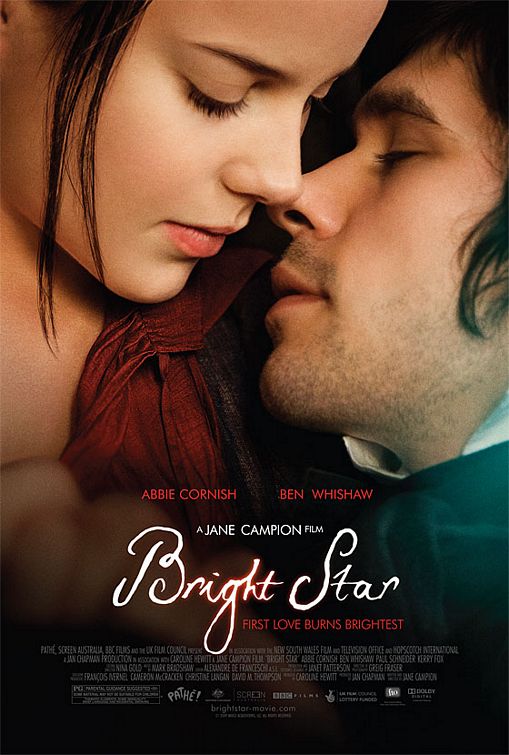
While reading the movie review of Bright Star, directed by Jane Campion, I made a connection to another classic Greek tale of Pyramus and Thisbe. As we begin to study ancient mythology from a variety of cultures through modern times, we will learn more about how great writers often take the oldest stories, the stories told throughout time as their inspiration, because the experiences of humanity last throughout time. Why do you think writers use old stories to inspire new ones?


http://www.npr.org/templates/story/story.php?storyId=112563951

http://www.world-english.org/stories_romeo_juliet.htm

Wow. That was weird.

 Well, last night I had a surreal experience. I went to my first large group teachers’ union meeting. I’m still trying to untangle how democratic the process was, what benefit it created, or detriment the outcome threatens. But before I go any further with my thoughts, I will say this: I am darn glad I know how to read. Why? Because these are some life-changing issues, and I really needed to be informed on what both sides were saying and doing about MY JOB, MY LIFE, MY PROFESSION, AND MY FUTURE.  I am not that different from many of the 1,500 or so teachers packed in that gymnasium last night. Many have my same credentials: a Master’s Degree in Education, many additional college credits, many hours of professional development classes, hours spent developing top-notch lessons, creative ways to motivate students, the latest teacher’s professional publications such as In the Middle by Nancie Atwood or anything by Robert Marzano.  I have spent a large percentage of my salary on setting up my classroom library, only to find that if a student lost or stole a book, there would be no recourse on my part, no chance of reimbursement. (But at least they have a book, right?) I am in the process of seeking National Boards’ certification to sharpen my reflective skills as a teacher, always asking myself, “How can I do better? How can I help one more student reach his or her potential? How can I motivate my students to be the generous and courageous young men and women I know they can be?”

So, last night, here’s what happened: For months, the union and the district had been in negotiations over workload, time, and compensation. The numbers are there, but they’re a little fuzzy. There’s no clear answer on what money is there. (And mind you, this is the most precious money of all: taxpayers’ money.) There were some clear cut recommendations on class size. I do think reasonable caps need to be put on class sizes, and when I say “caps” I don’t mean they all need new hats. That means a stopping point, a lid, a maximum number. (I know the adults reading this blog understand the idiom, but some students may not.) Also, they couldn’t agree on the reasonable amount of meetings. We do have too many, maybe,  but most teachers complain bitterly about them. What upset me is I’ve been in charge of many of the meetings, and I strive to make them meaningful, informative, and time well spent. I’m not going to take it personally, however; planning those meetings for the department or the school is hard work, and mostly I’ve found them fun and a good time for everyone to get together as a school. Perhaps other schools don’t do such a great job with the meetings. One of my colleagues has a difficult time getting to the meetings because of childcare issues, and when “they” take roll call during a last-minute meeting to check who’s there and who’s not, well, that might get a little demoralizing. The class size issues are valid. It is very difficult to meet and confer with each and every student if a class size is over 25, much less so if over 30. The heart of this issue is, many of our students do not have the home structure they need in order to succeed in school. In my own household, we have two working parents, and it’s extremely difficult to juggle home and our jobs. I get it. So, my job is to, before, during, and after school (when I”m not going to a meeting, running Anime Club, or trying to figure out what to make for dinner) is to be there for every student, every day, because every one of my students counts.

Now, as far as compensation goes, well, every teacher will tell you they didn’t go into this job for the money. And, I really hope that if the first two issues are resolved, then maybe they can come to an agreement about reasonable pay. Some have said we’re top heavy as far as administration goes. I also know that I know many of the skilled and dedicated professionals who have ambitiously and purposefully risen to the ranks of administration, and they are some of the most dedicated, intelligent, and creative people I know and have the honor to work with. So, the vilification on both sides is very tough to hear, too.

I wish there was a third option for public schools, where there wasn’t this “us” and “them” dynamic, but truly a “we,” a genuine professional learning community. I do think the seniority scale needs to be reviewed, meaning one doesn’t keep their job simply because they’ve managed to do it for 30 years. I also think one should reach the “top” sooner than 25 years–having entered this career later in life, there’s no way I’m going to make it for 25 years! Well, maybe I will…who would want me for a teacher when I’m 70 years old? (Shivers and horror, I know!)

All of this is my opinion. I’m still trying to sort it out. And, I feel a little powerless in the process, too. The only thing that helps me feel better is reading about it, and writing about it. Those are the only things I have true control over–keeping informed and working it out with words.

You've got style, babe…

You know, my Washingtonian darlings, you won’t start school until Monday, August 31. And you will complain, although I have it on good authority you’re actually excited to be back. It’s okay. You don’t have to tell me.

Anyway, one of my favorite cousin’s sons has already started ninth grade English. I’m not sure if he’s in honors or not, but my cousin asked me if I could help him with an assignment. Apparently, his class is reading Alas, Babylon and Lord of the Flies. I have never read Alas, alas, but I am fascinated and fond of Lord of the Flies.

Lord of the Flies by William Golding

He asked me to help him develop questions based on stylistic elements of literature. Um, yeah. That was kind of like asking me to pull apart the richness of a thick, gooey, chocolate cake with chocolate chips, chocolate frosting, and a side of chocolate–LOTF is so rich with symbolism, motifs, allusions, allegory, foreshadowing and all-around awesomeness of writing, it’s almost impossible to pull it all apart–but not totally. This is the challenge of discussing amazing literature–novels, short stories, poetry–all deep and interesting texts that connect us as humans. Lord shows us that we, in our deepest hearts, can be cruel, savage, and bloodthirsty bullies. It also shows us that evil may take many forms, but it can be fought: when it’s left unchecked, our society and connections fall apart.

Oops. This wasn’t about me writing a thesis paper on Lord of the Flies. It was about finding and understanding literary terms, so you can apprecitate, understand, and desire reading:

Fairly comprehensive glossaries of literature terminogy: http://classiclit.about.com/od/literaryterms/Glossary_Terms.htm

http://www.virtualsalt.com/litterms.htm

Embrace your literary style.

Ooo-ooo– another literary terms website that, well, rocks: http://www.tnellen.com/cybereng/lit_terms/

Blackbird singing in the dead of night…


3177645376_16087ab598_b

Now you’re going to think I’m obsessed with crows. I’m not. (At least I don’t think I am. In any case, that’s between me and my “doctor.”) My husband sent me this link to this story, including video, from Wired magazine. Again, these birds are demonstrating intelligence and creative thinking. Check out this story and links, and let me know your thoughts: http://www.wired.com/wiredscience/2009/08/aesopscrows/

Questions: Who was this fellow Aesop they refer to in the article? What did he do that he is now famous for? Do you know of stories from your own culture that are like Aesop’s? Could you write a modern-day fable? What would be the moral or lesson?

Falling Down a Rabbit Hole Near You…

“The time has come,” the Walrus said,
“To talk of many things:
Of shoes–and ships–and sealing-wax–
Of cabbages–and kings–
And why the sea is boiling hot–
And whether pigs have wings.”

Let’s talk about some other things.

I read Alice in Wonderland when I was an adult, long after seeing the Disney animated version (though it was first released in 1951, I saw it years later). I don’t know that much about Lewis Caroll, admittedly, but I do know Alice  works as a dream, as a fantasy, a stream of consciousness. It’s crazy as a Mad Hatter, and as mysteriousas a hookah-smoking caterpillar.

Before the new movie comes out, I highly recommend you read Carroll’s version of Alice, and some of his other writing. Judge for yourself whether or not a dream-like, nutty as a fruitcake story still holds up after all this time, and under Tim Burton’s masterful visionary film making (well, my opinion anyway).

Really, now you ask me,’ said Alice, very much confused, `I don’t think–‘

`Then you shouldn’t talk,’ said the Hatter.

http://www.literature.org/authors/carroll-lewis/alices-adventures-in-wonderland/

http://www.jabberwocky.com/carroll/walrus.html

http://www.sparknotes.com/lit/alice/

You really DO like to read, don't you?

Teens read more than they let on.
If you believe a scary US report, reading is on the decline. But, says Steven Johnson, it completely fails to consider the amount that we do every day on our computers.

Teenager reading a book

From The Guardian, http://www.guardian.co.uk/technology/2008/feb/07/internet.literacy

“Dawn of the Digital Natives”

The NEA makes a convincing case that young people are reading less, but it completely excludes reading done on computers

We’ve been hearing about the decline of reading for so long now that it’s amazing a contemporary teenager can even recognise a book, much less read one. The US (where I am) seems to be cycling through yet another “Johnny can’t read” mini-panic, sparked by the release of a National Endowment for the Arts study, called To Read Or Not To Read, which chronicles in exhaustive statistical detail the waning of literary culture and its dire consequences for society. Newspapers dutifully editorialised about America’s literacy crisis.

It’s the sort of “our kids in peril” story – right up there with threats of MySpace predators – that plays well as a three-minute television newsbite or a three-paragraph op-ed piece. But if you actually read the report, what you find are some startling omissions – omissions that ultimately lead to a heavily distorted view of the Google generation and its prospects.

You need to read it

The NEA makes a convincing case that both kids and adults are reading fewer books. “Non-required” reading – ie, picking up a book for the fun of it – is down 7% since 1992 for all adults, and 12% for 18-24 year olds.

The subtitle of the NEA report – A Question Of National Consequence – would lead you believe this dramatic drop must have had done significant damage to our reading proficiencies as a society. And indeed, NEA chair Dana Gioia states boldly in his introduction: “The story the data tell is simple, consistent and alarming.” But then the data turns out to be complex, inconsistent and not really that alarming at all. As Gioia puts it, in the very next sentence: “Although there has been measurable progress in recent years in reading ability at the elementary school level, all progress appears to halt as children enter their teenage years.”

What was that again? There’s measurable progress in two of the three age groups reviewed? Actually, it’s more than just measurable: if you look at the charts, the single biggest change – either positive or negative – is the spike upwards in reading abilities among nine-year-olds, which jumped seven points from 1999.

But at least there must be an “alarming” drop in reading skills among those 17-year-olds to justify this big report. And there it is: the teenagers are down five points from 1988. But wait, this is all on a scale of 0-500. If you scored it on a standard 100-point exam scale, it’s the equivalent of dropping a single point. Not exactly cause for national alarm.

And we’re comparing two different generations. Today’s teenagers are the nine-year-olds who didn’t test all that well back in 1999 – presumably because they didn’t develop a love of reading that would sustain them through the competing attractions of being a teenager in the digital age. But there’s no reason to suspect that the current crop of nine-year-olds won’t be much better at sustaining their interest in reading given their current performance.

Comparable non-events appear when you look at prose literacy levels in the adult population: in 1992, 43% of Americans read at an intermediate level; by 2003 the number was slightly higher at 44%. “Proficient” readers dropped slightly, from 15% to 13%. In other words, the distribution is basically unchanged – despite the vast influx of non-native English speakers into the US population during this period.

All of which raises an interesting question: if people are reading less, why haven’t scores dropped more dramatically? The answer gets to the most significant sleight of hand of the NEA study: its studies are heavily biased towards words on a printed page.

Odds are that you are reading these words on a computer monitor. Are you not exercising the same cognitive muscles because these words are made out of pixels and not little splotches of ink? According to the NEA you’re not, because in almost every study it cites, screen-based reading is excluded from the data. This is a preposterous omission, because of course the single most dramatic change in media habits over the past decade is the huge spike in internet activity.

Yes, we are reading in smaller bites on the screen, often switching back and forth between applications as we do it. A recent study by the British Library of onscreen research activities found that “new forms of ‘reading’ are emerging as users ‘power browse’ … ”

And of course we are writing more, and writing in public for strangers: novel readers may have declined by 10%, but the number of bloggers has gone from zero to 25 million. Simply excising screen-based reading from the study altogether is like doing a literacy survey circa 1500 and only counting the amount of time people spent reading scrolls.

All Gioia has to say about the dark matter of electronic reading is this: “Whatever the benefits of newer electronic media, they provide no measurable substitute for the intellectual and personal development initiated and sustained by frequent reading.”

Technological literacy

The only reason the intellectual benefits are not measurable is that they haven’t been measured yet. There have been almost no studies that have looked at the potential positive impact of electronic media. Certainly there is every reason to believe that technological literacy correlates strongly with professional success in the information age.

I challenge the NEA to track the economic status of obsessive novel readers and obsessive computer programmers over the next 10 years. Which group will have more professional success in this climate? Which group is more likely to found the next Google or Facebook? Which group is more likely to go from college into a job paying $80,000 (£40,600)?

But the unmeasured skills of the “digital natives” are not just about technological proficiency. One of the few groups that has looked at these issues is the Pew Research Centre, which found in a 2004 study of politics and media use: “Relying on the internet as a source of campaign information is strongly correlated with knowledge about the candidates and the campaign. This is more the case than for other types of media, even accounting for the fact that internet users generally are better educated and more interested politically. And among young people under 30, use of the internet to learn about the campaign has a greater impact on knowledge than does level of education.”

In a piece for the New Yorker, Caleb Crain manages to write several thousand words about the fate of reading in the modern age with only a few passing references to the computer screen. Unlike the NEA, he at least acknowledges the potential benefits in one brief paragraph: “The internet, happily, does not so far seem to be antagonistic to literacy. Researchers recently gave Michigan children and teenagers home computers in exchange for permission to monitor their internet use. The study found that grades and reading scores rose with the amount of time spent online.”

Screen shift

The problem with both arguments is that they’re fundamentally rehashing the technological opposition of the television age, the kind of opposition that McLuhan wrote about so powerfully back in the 1960s: word versus image, text versus screen. But that long-term decline towards a pure society of image has been reversed by the rise of digital media. What separates the Google generation from postwar generations is the shift from largely image-based passive media to largely text-based interactive media.

We don’t know exactly how that will play out in the long run, but thus far, when you look at the demographic patterns of the Google generation, there is not only no cause for alarm: in fact, there’s genuine cause for celebration. The twentysomethings in the US – the ones who spent their childhood years engaged with computers and not zoning out in front of the TV – are the least violent, the most politically engaged and the most entrepreneurial since the dawn of the television era.

But if you listen to the NEA, we are perched on the edge of a general meltdown: “The general decline in reading is not merely a cultural issue, though it has enormous consequences for literature and the other arts. It is a serious national problem.” A serious national problem with no apparent data to support it. Perhaps the scholars at the NEA should put down their novels and take some statistics classes?

· Steven Johnson is the author of Everything Bad Is Good For You: How Today’s Popular Culture Is Actually Making Us Smarter and The Ghost Map, available from guardian.co.uk/bookshop

· This article was amended on Thursday February 14 2008. The chairman of the National Endowment for the Arts is Dana Gioia, not Giola as we had it in the article above. This has been corrected.

 From: http://www.guardian.co.uk/technology/2008/feb/07/internet.literacy

Graphic Novels, Manga, and the New York Times

Sandman

http://artsbeat.blogs.nytimes.com/2009/07/17/graphic-books-best-seller-list-july-11/

If you’re looking for some graphic novel/manga recommendations, check out this link from the New York Times newspaper. I am starting the Sandman series by Neil Gaiman, and the Batman graphic novel looks interesting, too.


Got Imagination?

Smith’s book, How to be an Explorer of the World, is a feast for the mind and soul. Don’t live in a world of grays and browns – wake up and smell the creativity!

http://www.amazon.com/How-Be-Explorer-World-Portable/dp/0399534601

 You know me. I like to be creative. Think. Make art. Write. Read. I really appreciate what Keri Smith put together in her book about exploration.

For example, on page 144-145, she writes:

Thought Experiments: Einstein used “thought experiments” (questions that can only be solved using imagination), on a regular basis. He actually formulated the special theory of relativity by asking the question, ‘what would it be like to travel on a beam of light?’ It is interesting to conduct these thought experiments in the midst of everyday life.

Some thought experiment starters:

  • what if all my neighbors had secret lives?
  • what if the newspaper held all the secrets of the universe in some kind of code?
  • what if all leaves had secret messages embedded on them?
  • what if little elves lived on the roof and only came out at night?
  • what if my house were a playgroun? a blank canvas? had secret powers?

Â