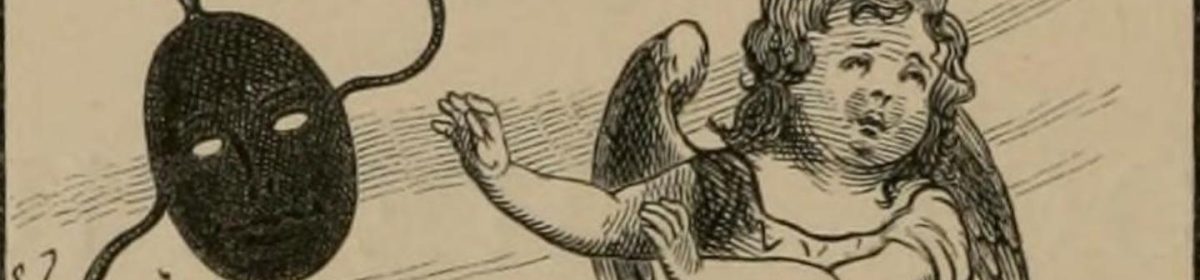
“It’s as simple as folding some paper and letting your creativity flourish. Splatter paint on it, write words haphazardly across the page, photograph everything. You can write about cats or “Doctor Who” or the ways media is suppressing black voices. There are no rules and no limits.”
Seriously: the potential for this!! Students crave a balance between making things and screentime, though these can be published on- line too, and distributed to a wider audience. But how intimate and urgent is the passed note, the quick shout?
I am curious, though, what would be the learning target and success criteria wording?
Something to the effect, “SWBAT…
I mean, just how do I translate “But, as Rookie Magazine said, “Zine-making isn’t about rules or knowledge; it’s about freedom and power.” to a learning target?
Magical paraphrasing will come to me, no doubt.
In any case, I’m thinking this is a great idea to spark January or add to my Burning Questions unit (whenever that happens…).
But maybe that’s the point of a zine: it needs to happen right now. Maybe I’ll make one this afternoon.
Recently my arrival at some conclusions has left me feeling a bit off, beginning with my inability to make decisions or plan, as if I thought I knew what my destination was, only to find out I am on the other side of the rails. In conjunction with the dawning light that while I work at a Title I school, my judgment, motivation, professionalism and even integrity will always be criticized at worst, and questioned at least. Can I build up my students’ learning with the help of colleagues and collaboration, or will continue to be singled out?
Which is why I’m sitting here questioning if this idea is a good one or not. If I’ll get support or buy-in, or not. And if not, does it matter? Not all ideas are good ones.
*Inner voice: “Stop. Stop writing about your process. Just spill it: what’s the idea?”*
Okay: World Building.
Think about it.
This unit would cover every single content area, including health/fitness.
Social Studies: What better way to understand the world and history than to create one from scratch?
English/Language Arts: What better way to familiarize oneself with archetypes, monomyths, plot, setting, structure and creativity?
Math: What better way to understand how the boundaries and shapes of things influence our lives? Productivity, consumerism, population and exponential thinking and real-world problems?
Science: What better way to look at the impact of disease, oceans, pollution, land masses, air to breathe and inventions influence culture,
PE/Health: What better way to explore the kinetic movements of cultures, tribes, groups, cities, as well as health and well-being? Do you think for one moment Thorin Oakenshield wasn’t buff?!
(Just needed an excuse to post a picture of T. O.:)
Exploratory: Cooking, making, building, music, technology: all the ways we’re connected and engaged.
I read The Fifth Season by N.K. Jemisin recently, and it’s amazing. It does have some graphic sexuality, so wouldn’t recommend for anyone younger than 17-18. Her world-view and creation are sublime. It took me some time to understand what was happening, but once I fell into the setting it felt like I had lived there forever, and now. And isn’t that the true beauty of a new world, a fantasy world? It feels more truthful than the real one and helps give context to what’s known and believed.
I often tell students that the best thing about writing is getting to play god/goddess: you create the world and control the characters, and this is empowering. At this writing, I’m not sure what the end product will be, or the essential questions/enduring understanding. Units weren’t built in a day, you know.
One idea to help students get started is to take a few ‘micro’ pictures of land, and see if they can create a world from it:
Except for the giant beastie’s leg, this might be a good place to start.
So, as I’ll map out my ideas later. The essential piece is the questions, and take a page from creation and origin myths. What needs to be made first, and how to make it?
I need to interrupt this regularly scheduled blog post to talk about something…odd.
Call it a coincidence, call it fate, call it noticing patterns and ‘close reading’ of the minutiae of my life.
Two days ago I chose to catch up on some podcasts, and Stuff You Missed in History Class came on featuring a teacher named Jerry Hancock. His expertise is the history of Sears in American culture, economics, etc. And while that was fascinating, what struck me was his introduction about his teaching life. He clearly says because his school is doing academically well “they” leave him alone, and he’s happiest when he can shut his door and teach. He’s a high school history teacher in Georgia, was a teacher of the year.
“As long as my door’s closed and it’s just me and my students I’m happiest.”
Working at a high-poverty school Title I school has far more benefits and rewards than drawbacks, no question about it. Over the years I’ve had the illusion at least that I have academic freedom, and because of my personal values, background, and integrity, with a hefty dose of life experience and creativity, each day I’m reminded of the gift of having a profession where I can put my talents to actual, purposeful use. And isn’t that what everyone wants? Purpose? Self-actualization? The ability to use the bathroom once in awhile? (Yes, every day is a trip up and down Maslow’s pyramid. Every. Damn. Day.)
But there is a HUGE drawback, and I’m not sure what to do about it, and quite possibly, there is nothing to be done about it.
Because as long as there is racism, sexism, poverty and standardized testing where the money to teach our students draws from its well, there will always be meetings and reflective practices about what teachers, and teachers alone, can do better. I know it’s a team effort, I know everyone has skin in the game, I know…I know…but sometimes the conversation is ambushed by ‘teacher-centered’ ideas and not student-centered, and since the two are interconnected things disconnect. The serenity prayer rocks off the rails: trying to decide what we have control over or not feels disingenuous right about now.
But I do have control over myself (to a greater or lesser degree). I do not have control how others perceive me, and that is my Achille’s Heel because I keep making the mistake of thinking I do.
The biggest cause of despair amongst myself and colleagues is the microscopic, pseudo-psychology cabal of discussing what we teachers are doing wrong because our scores are low.
We don’t want them to be. We are not trying to sabotage or destroy the process. For the most part, we are desperately seeking to support all of our students, and meet or exceed their expectations. One of my personal joys is that I am paid by their parents, by the community: I work for them, for their future. My efforts will directly affect their futures.
However when the adults are choosing, discussing, mandating, reflecting, whatever gerund you want to use, decisions must be made with surgical precision. I am wondering if there is something more insidious at stake: the gambler’s fallacy. And I wouldn’t say it’s doing the same things over again, but not recognizing when we’re trying to do something different. From my time spent getting my masters, the research-based drive is the gold standard. So we’re caught in a fixed space that’s moving, like a car or an airplane: we’re moving at hundreds of miles per hour, but stuck in our seats. The seat is the research, the will is the speed.
What if we flip the script? Instead of looking at boxes by race, gender, and special needs, what if we ask students what they think? How powerful to have a cohort of students asking and questioning what they see as the issues they face? I did such a thing a few years ago when I showed students that their data was being tracked by race and gender. Quite frankly, they were appalled. It infuriated them that their lives and education were reduced to check boxes. I think it’s time to bring back that question to my 8th graders.
It must be noted that race and gender are fixed, as least race is. With the growing awareness of transgender and gender identity gender is perhaps more fluid.
And if you’re confronting issues of racism, sexism, and poverty, how brave will you be? Will you change anyone’s mind?
Well, I have no answers. More questions…more and more. It’s the first day of winter break, or rather the first weekend day, and my eyes are puffy from crying the night before, (TL:DR: the adults. Always the adults.) The house is quiet, and two weeks of my sons, my dogs, and my creative drive is spread out before me.
And time to listen to more podcasts.
Here are some mentioned in this article, and more of my favorites:
I have others on feeds, too, such as Nerdist, etc. but tend not to click on those as much.
To me, the essence and exquisite simplicity of a podcast are the big questions the writers ask at the beginning, the overarching themes they will explore: if this isn’t what we want all students to do — question, reflect, critically think — then I’m out of ideas.
After the break I plan on using podcasts for thinking and creating. How have you used podcasts in your classroom?
Documentaries are non-fiction with bias. At least that’s how I define it…because documentaries are so much more than just presenting facts. Sheila Curran Bernard says it better:
“Documentaries bring viewers into new worlds and experiences through the presentation of factual information about real people, places, and events, generally — but not always — portrayed through the use of actual images and artifacts. But factuality alone does not define documentary films; it’s what the filmmaker does with those factual elements, weaving them into an overall narrative that strives to be as compelling as it is truthful and is often greater than the sum of its parts.”
Documentaries must not stay in the domain of history or social studies but extend far into all content areas. Moreover, students creating their own documentaries may be the most powerful voice and tool of all. If you’re heavily embedded in fiction and literature studies, consider documentaries that discuss the lives of the authors, or take on a meta-fictional approach.
And what a grand opportunity for students to explore and analyze sources:
This upcoming January-February I’ll return to the Journey of the Hero unit. It’s been tossed, denigrated, punched, and still, it comes up standing, ready for more. Joseph Campbell never fails me. The ginormous binder tome that contains its massive and timeless information, and look forward to those ah-ha moments when students recognize nearly every single story, movie or tale is indeed, a monomyth.
The CCSS which specifically address Journey of the Hero or monomyth are not under the heading of Craft and Structure, but these:
Integration of Knowledge and Ideas:
CCSS.ELA-LITERACY.RL.8.7
Analyze the extent to which a filmed or live production of a story or drama stays faithful to or departs from the text or script, evaluating the choices made by the director or actors.
CCSS.ELA-LITERACY.RL.8.9
Analyze how a modern work of fiction draws on themes, patterns of events, or character types from myths, traditional stories, or religious works such as the Bible, including describing how the material is rendered new.
But I can’t help but think the good people at the CCSS got it a little wrong–patterns are structure.
There is nothing new under the sun. When considering structure, scholars propose that there are no new stories, not really, and we can find stories fitting into a minimum amount of plots:
But this analysis or categorization creates inherent boredom in our content area, so I caution all of us not to get into the systemic drilling of parts, and forget to put back together the whole.
Maybe that is really the theme of Shelley’s Frankenstein: the man could not make better what the gods created, and putting it back together makes it awkward and angry. When analyzing plot and the various types of plot, make sure to step back and look at the whole map, and allow students moments of many personal connections. A story is only as good as we hear it.
When I clicked on this link this morning, I did not know who the producers were. I had no idea about bias, message, or author’s purpose. I just sat and watched it, thinking it a sweet narrative.
Normally I’m not so blinded by the surprise, the hidden but the overarching message. I didn’t think I was susceptible to misdirection: why? Because I know what it means–how can we be tricked when we invented the magic?
But I was, and the effect was devastating.
No spoilers here. I’ll allow you the same effect–would love to hear your comments, though.
As we weave in the CCSS into our instruction, create engaging work, etc. it’s my nature to dive deeply into the subject area–to me, that’s what great teachers do, even if they know a subject intimately. It’s the artist in me: there’s always more to observe and try. With that in mind, I am writing a series on structure, craft, and style.
The first idea I want to share comes courtesy of my intelligent and wonderful colleague, Tami Gores. She and I are both working with coaches, and also have a common ground understanding of my friend and mentor, Holly Stein. (I mention this because it’s refreshing to work with someone who understands me, and I hope she feels the same. In this world, having any shared history with a colleague is a gift.)
She is the Queen of Co-Constructed Anchor Charts. The first ah-ha moment she provided me was the idea of how structure influences effect:
Courtesy of Tami Gores
We ELA teachers understand the rudimentary plot diagram:
From Chalkboxtales.blogspot
But structure is so, so much more than this. This is the little engine that could, and while important to teach, it’s a place to start. This series will explore these ideas. With Tami’s help, and working with other ELA folks in my building, I’m sure we’ll come up with wonderful shared instruction for our students that’s relevant and empowering.
To me — there are few things more empowering that understanding another’s story. Stay tuned.
A student who’s in the AVID program at school recently asked for ‘help’ in writing some “Level 3” (based on Costa’s work) questions. Having taken AVID training myself a few years ago, and created Levels of Questions work, he knew I was a go-to source. However, what he was not understanding that “giving” him questions was not appropriate nor was it helpful. But at least he’s honest–he just wanted the “answers” in the form of questions. He didn’t want to do the mental heavy lifting. And he’s not alone–far from it. Students have been parroting their purposes for learning things like pull-string talking dolls:
Me: “Why are you learning CERs?”
Them: “So we can get a good education.”
Me: “No–how do they help you learn?”
Them: “So we can learn.”
Me:
There are several factors I can think of why the wheels are off the bus, but the wheels are off indeed. So time to figure out how to get some traction going again.
No more Mrs. Nice Teacher. (If I ever was.)
Back to foundational lessons, and the one that gets the most learning mileage includes questioning strategies. In order to be an independent learner, we must be able to ask questions.
Here are some good resources I’m digging into, and you might find useful, too. Some I’ve created, and am happy to share.
Cassandra based on Anthony Frederick Augustus Sandys, 1904.
None of this is new news.
We are hurting.
Our economy, our growth, our creativity: we see it, we call it out, and we try, desperately, to avert the tsunami. And it feels as if the invisible force of money drowns us, like a force of nature, pressure systems, and earthquakes shaking us little humans and dumping us on our heads.
I constantly think about…
coal miners.
People who’ve worked in the ground for centuries and what they dig from the earth no longer matters. And everyone knew it. So they equate the people who dig as the ones who don’t matter.
I’ve thought this since I was in second grade: why don’t the big companies shift and switch and do research into energy and food that’s sustainable and gives people the jobs they need?
Why?
Don’t they want to stay in business?
Don’t they want to make a profit and have people buy their stuff?
Seemed to me the best way to prevent revolutions and bloodshed is to be real, mature, and functional about the realities of how the world works.
But now I don’t know how the world works anymore.
My childhood questions echo back.
I need to know where good is. Where growth and prosperity are.
I don’t need America to be #1. This is not a zero sum game. I want all of us to get what we need.
Things may get worse, again, before they get better. We can’t seem to move forward without burning it all down.
PBS produced a show about childhood poverty in the U.S. six years ago. Here are some of the highlights:
Much is made in social media about a lot of offensive and divisive issues–hand-wringing, outrage, and heavy-handed bouts of misinformation that spreads while truth and fact-checks go unheard as whispers. No one seems to be listening. One of those cries is, “Doesn’t anyone teach Civics anymore?” implying that how could anyone vote for X or Y if they knew what the outcome would be?
I’m going to pull at that thread a little bit — and answer I don’t know, really. I have a narrow scope on what is taught in middle school. I know that the social studies teachers have taught civics and government, as well as American History, as best they can, including participating in mock trials, etc. But the turnover and continued traditions of teaching actual civics…that I can’t speak to. Uncomfortably and painfully — we’ve been directed toward skills only approach, and not strategies or really allowing for skills and skill assessment to direct or help with the bigger thinking. Point being, if the skills of civics are taught — the functions of government and their definitions –how are those transferable to really, deeply understanding and critical thinking that our world demands?
This was an election of feeling, of id, of lizard brains, wishful thinking, prayers, voodoo, lies, and bigger lies. But the results are concrete. On day one, those who listened and felt empowered by hate speech have taken action, the new normal of propaganda and destruction.
And while all of this swirls down the sewer drains, we cling to the filth and try to make plans on how to stay strong and safe. If you’re not sure how our government is supposed to work by law, and can’t figure out why half of the nation is howling in Constitutional pain, then read and learn.
As we’re watching history spin, spin, spin down the drain, feeling sick and terrified, and then being told to “calm down” — may I respectfully ask that YOU READ SOMETHING.
Now we have a president-elect who daily used hate speech. Citizens relinquished their blood-fought rights for a man who will not only not serve them, but despises them and put all of us in harm’s way.
We must now all become veterans, all become soldiers and stand against this to protect ourselves and each other. The threat is from the inside, and has been for decades.
Why the picture of Anne Frank? Because we don’t teach about Anne Frank anymore. Her diary is boring. The Holocaust is ‘boring.’ Blah blah blah 6 million people died blah blah America was the hero with our Allies Hitler’s dead and we won. Did we learn anything? I am disheartened to say my fear is no, but my hope is yes–we have access to writing our own diaries now and having hundreds, if not thousands of people, read them in real time. I want boring. I want life, and liberty, and the pursuit of happiness. Just like Anne Frank. Just to be normal, and not normalized.
For my part, folks have had the audacity to minimize my knowledge with ‘eye roll’ emojis.
I know why people voted for Trump. My husband and I have suffered many of the same marginalization of the middle class and lower financial status classes. They want to feed their families, save for retirement, and grow. We all do. And their voices were ignored for so long, they became desperate and angry. They allowed themselves to be drawn into scapegoatism and bigotry because that’s what nuzzles up to anger. Kindness is boring. Being smart is boring. Being angry and loud–now that gets peoples’ attention. But when despair creeps in again, and it will very soon because of the financial moves he and his ‘people’ are about to make, and those who voted for him realize they just put their necks in the wolves’ mouths, I may be out of parables and warnings.